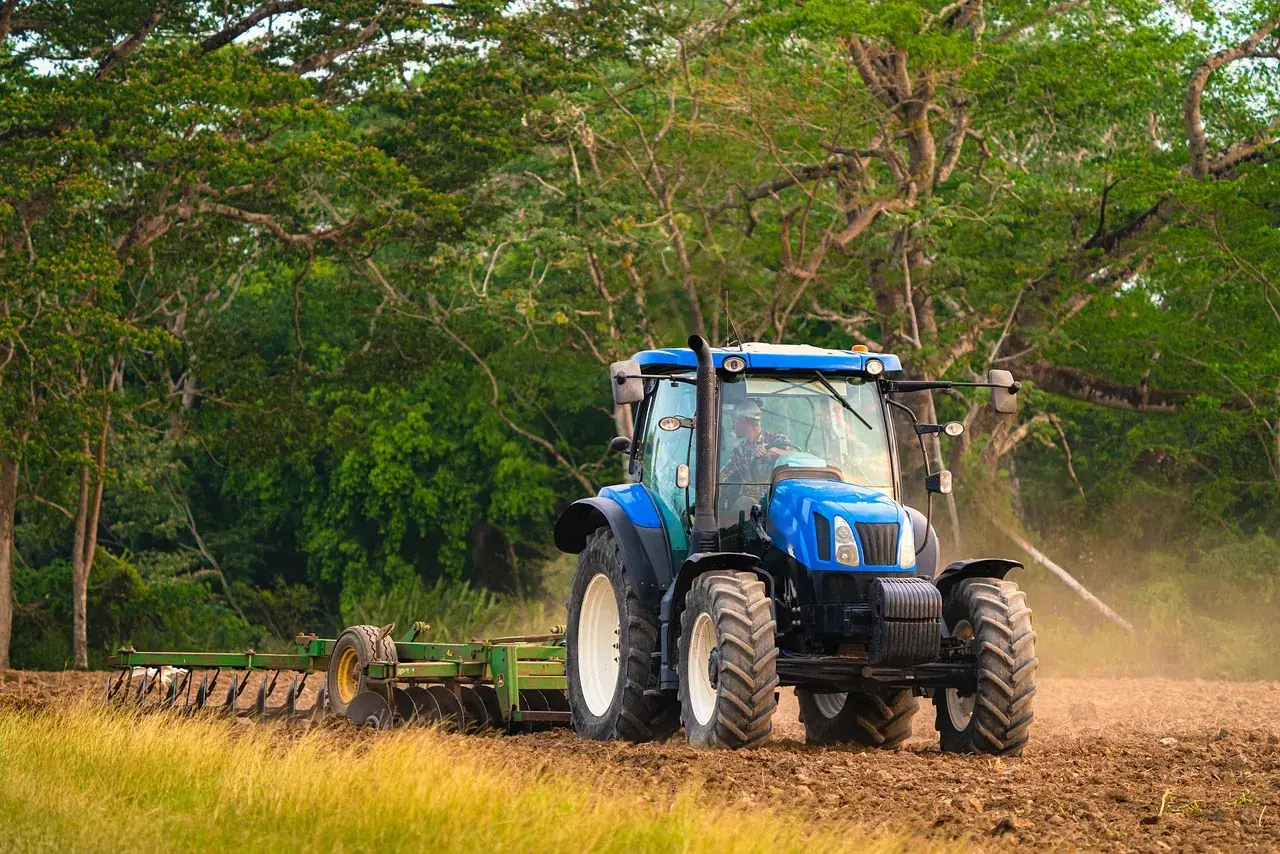
Agricultural Finance · UK & Europe
Agricultural Equipment Leasing & Hire Purchase
Finance for tractors, combines, sprayers, dairy systems, grain storage and on-farm energy, with payments that can be matched to harvest, milk and livestock income. Lease or hire purchase, arranged across more than 40 funders.
Farm finance
Equipment finance built around how farms earn
Agricultural equipment finance lets farms and agricultural contractors acquire machinery and infrastructure without paying the full cost upfront. The two main routes are leasing, where a funder owns the equipment and the farm pays rentals to use it, and hire purchase, where the farm pays in instalments and owns the equipment at the end. Both are secured on the machinery itself.
Farm income arrives in peaks, after harvest, with the milk cheque or when stock is sold, while machinery has to be in the yard and working ahead of the season. Asset finance bridges that gap, keeps cash and overdraft headroom free for inputs, rent and wages, and spreads the cost of each machine over the years it earns its keep.
Oak Leasing has arranged equipment finance since 1992. As a bespoke pan-European funding facilitator rather than a lender, it places each farm transaction with the funder best suited to the machinery, the business and the payment profile, from mainstream agricultural lenders to specialist asset funders.
Use, not own
Agricultural equipment leasing
With a lease, the funder buys the equipment and the farm pays fixed rentals over an agreed term, typically two to seven years. The farm uses the machinery as if it owned it, but the funder remains the legal owner.
Finance lease
Rentals cover most or all of the equipment cost. At the end of the primary term the farm can usually keep using the machine on a low secondary rental, or sell it on the funder’s behalf and receive most of the proceeds. Suited to equipment the farm intends to run for most of its working life.
Operating lease
The funder takes a view on what the machine will be worth at the end, so rentals cover only part of its cost. Payments are lower and the equipment is simply handed back or replaced at the end. Popular for tractors, telehandlers and technology that farms want to change on a regular cycle.
Why farms lease
- No large deposit: leases usually start with one or more rentals in advance.
- VAT is charged on each rental rather than on the full price at the start.
- Rentals are generally treated as a business expense for tax.
- Easy replacement cycles keep the fleet modern and reliable.
- Leaves bank facilities free for land, buildings and working capital.
Leasing suits farms and contractors that value predictable costs and regular renewal over long-term ownership.
Own it at the end
Agricultural hire purchase
Hire purchase is the most widely used way to fund farm machinery in the UK. The farm pays a deposit, often covering the VAT, followed by fixed instalments. Once the final payment and any small option fee are made, ownership passes to the farm.
For tax purposes the farm is generally treated as the owner from the start, so it can claim capital allowances on the machine, which can be valuable for both farming companies and partnerships.
Hire purchase is ideal for core equipment that will be kept for many years, such as combines, main tractors, drills, grain dryers and dairy systems.
Hire purchase at a glance
- Ownership at the end of the agreement.
- Capital allowances generally claimed by the farm.
- Interest is deductible as a business expense.
- Deposit can sometimes be met with a trade-in or part-exchange.
- Instalments can be monthly, quarterly, annual or seasonal.
- Used machinery can be financed as well as new.
Read more about hire purchase equipment finance.
Compare
Leasing vs hire purchase for farm machinery
| Finance lease | Operating lease | Hire purchase | |
|---|---|---|---|
| Ownership | Funder throughout | Funder throughout | Farm, after final payment |
| Upfront payment | Rentals in advance | Rentals in advance | Deposit, often covering VAT |
| VAT | On each rental | On each rental | On the full price at the start |
| Capital allowances | Generally the funder | The funder | Generally the farm |
| Regular payment | Medium | Lowest | Highest |
| End of term | Secondary rental or sale with proceeds share | Return or replace | Farm owns the machine |
| Best for | Long-life kit used for most of its life | Tractors and kit replaced on a cycle | Core machinery kept for many years |
Tax and VAT treatment depends on the agreement and your circumstances. Confirm with your accountant before choosing.
Assets
What agricultural equipment can be financed?
Field machinery
Tractors, combine harvesters, forage harvesters, drills, cultivators, ploughs, sprayers, spreaders, balers, mowers and loaders.
Handling and transport
Telehandlers, loading shovels, trailers, ATVs and yard equipment.
Dairy and livestock
Robotic and parlour milking systems, feeders and mixer wagons, cooling tanks, handling systems and housing equipment.
Precision and agri-tech
GPS guidance and auto-steer, yield mapping, drones, sensors, farm management systems and robotics.
Storage and processing
Grain dryers, bins and silos, cold stores, grading, packing and processing lines, and irrigation and glasshouse systems.
On-farm energy
Rooftop and ground-mounted solar, battery storage, biomass boilers and anaerobic digestion, cutting energy costs and adding income.
Cash flow
Seasonal and flexible repayments
Farm finance works best when payments fall when money comes in. Funders can structure agreements around your income pattern rather than a standard monthly schedule.
- Harvest-linkedAnnual or half-yearly payments timed after harvest for arable and combinable crop farms.
- Seasonal skipsReduced or no payments in the months when income is lowest, with higher payments when it peaks.
- Deferred startA first payment timed to when the machine starts earning, for example after the first season of use.
- Balloon paymentsA larger final payment to reduce regular instalments, often met by the machine’s trade-in value.
- Part-exchangeEquity in existing machinery used as the deposit on the replacement.
- RefinanceReleasing cash from machinery the farm already owns through equipment refinance.
UK, 2026
Tax, capital allowances and VAT
Capital allowances
- Annual Investment Allowance: 100% relief on up to £1 million of qualifying machinery spend each year, available to sole traders, partnerships and companies.
- Full expensing: farming companies can deduct 100% of the cost of qualifying new main-rate machinery, including on hire purchase.
- 40% first-year allowance: from 1 January 2026, available on new main-rate plant and machinery, including for unincorporated farms and most assets bought for leasing. It does not apply to cars or second-hand equipment.
- The main-rate writing-down allowance is 14% from April 2026.
VAT
On hire purchase, VAT on the full price is normally due at the start, and the deposit is often set to cover it. VAT-registered farms can usually reclaim it on their next return. On leases, VAT is added to each rental instead, spreading the cash-flow impact.
Which is more tax-efficient?
It depends on the farm’s structure, profits and other investment in the year. Hire purchase lets the farm claim the allowances itself; leasing gives a deduction for rentals over the term. Your accountant can model both.
General information only, not tax advice.
Dealers, manufacturers & Europe
For machinery dealers and European manufacturers
Dealer and vendor programmes
Agricultural dealers and manufacturers can offer lease and hire purchase at the point of sale through a vendor finance programme. Fast decisions and seasonal payment options help close sales ahead of the season and raise average order values. Smaller transactions from £10,000 can be arranged within a programme.
Machinery built in Europe
Much specialist farm equipment, including dairy robotics, grain handling and precision technology, is manufactured in continental Europe. For UK farms buying European-built equipment, Oak Leasing can arrange stage payment funding: the funder pays the manufacturer’s stage payments, secured by an advance payment guarantee, and the farm pays only interest until delivery.
With funders in 30+ countries, Oak Leasing also supports agricultural businesses operating across Europe. See European equipment leasing.
Oak Leasing
Why farms work with Oak Leasing
The right funder for the machine
Access to more than 40 funders, including specialist agricultural and asset lenders, so each deal is placed where it is best understood and priced.
Structures that fit farming
Seasonal, annual and deferred payments, balloon structures, part-exchange and refinance of existing machinery.
No cost to arrange
Oak Leasing is not a lender. Its fees are typically paid by the funder when the agreement starts.
Experience since 1992
A founding member of the Guild of Business Finance Professionals, arranging equipment finance across the UK and Europe for over three decades.
“John is one of the most honest and straight forward people I have had the pleasure to deal with. I would, without question, recommend John without hesitation.”
Charles Towers Clark, CEO, Pod Group of Companies
Want to see indicative repayments first? Try the equipment leasing calculator, or read Equipment Leasing: A Complete Guide.
Questions
Agricultural finance FAQs
Should I lease or hire purchase farm machinery?
Choose hire purchase if you want to own the machine and claim capital allowances yourself, typically for core equipment kept for many years. Choose leasing if you prefer lower upfront costs, VAT spread across rentals and a regular replacement cycle. Many farms use both for different machines.
Can repayments match harvest or seasonal income?
Yes. Funders can structure annual, half-yearly, quarterly or seasonal payments, payment holidays in low-income months and deferred first payments, so instalments fall when the farm has money coming in.
Can I finance second-hand agricultural machinery?
Yes. Used tractors, combines and other machinery with an established resale market are regularly financed on both hire purchase and lease. Terms may be shorter for older equipment. The 40% first-year allowance does not apply to second-hand assets.
Do I need a deposit for agricultural hire purchase?
Usually, and it is often set to cover the VAT. A trade-in or part-exchange can count towards the deposit. Leases normally start with rentals in advance rather than a deposit.
Can I claim capital allowances on financed farm machinery?
On hire purchase the farm is generally treated as the owner and can claim allowances such as the Annual Investment Allowance, full expensing for companies, or the 40% first-year allowance on new equipment. On leases the funder usually claims them and the rentals are generally deductible. Check with your accountant.
Can I release cash from machinery I already own?
Yes. Refinance or sale and leaseback lets a funder buy machinery you own and lease or hire it back to you, releasing working capital while the equipment stays on the farm.
Can you finance solar panels and batteries on a farm?
Yes. Rooftop and ground-mounted solar, battery storage, biomass and anaerobic digestion can be funded on lease or hire purchase, often with payments offset by energy savings and export income.
Is Oak Leasing a lender?
No. Oak Leasing is a bespoke pan-European funding facilitator for equipment finance, established in 1992. It structures each agreement and places it with the most suitable of more than 40 funders. Its fees are typically paid by the funder.
Finance your next machine
Tell us what you need and when, and Oak Leasing will structure a lease or hire purchase agreement around your farm’s cash flow.